
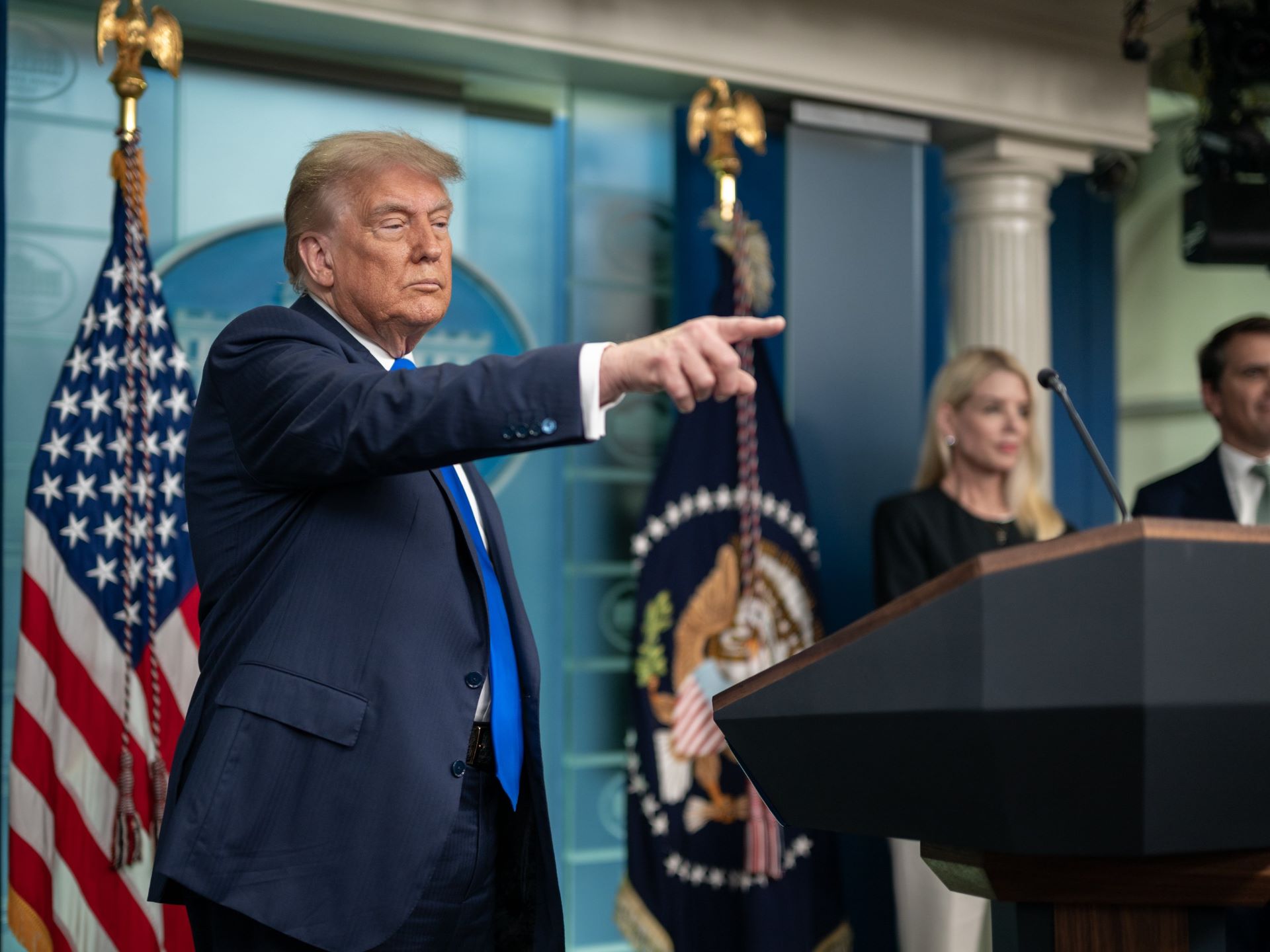
Picture by Molly Riley / Flickr
With the July 9 deadline looming, global markets especially Asian markets are bracing for a potential reactivation of the Liberation Day tariffs. After sparking market turmoil with his April 2 announcement, Trump paused the tariffs by 90 days, setting the implementation date to July 9.
Now, with less than a week to go, global markets are watching closely. Will this be Liberation Day 2.0 or just another TACO (Trump Always Chickens Out) instance?
“I don’t like the term ‘TACO’ because I think that’s trying to goad Trump or frame what he’s doing as not thoughtful. I think it is thoughtful, I think he does shock and bore. He does something shocking. He pins his negotiations to that, whether it’s what’s happening in Iran, whether it’s what’s happening with immigration or what happened with tariffs. He starts with a bang and then he falls back to a reasonable position that the markets can digest. So, you just have to take a 90-day view of everything he’s doing and then you’ll be fine.”
Indeed, many investors have grown accustomed to Trump’s high volatility negotiation style – what some might call the ‘TACO Trade.’ The strategy is centered on betting that the Trump Administration will walk back on their extreme policy threats after a initial shock.
But investors like Jason Calacanis argue that this pattern is not indecision, but it is intentional and deliberate. To them, Trump’s ‘shock and bore’ method is a strategic form of trade leverage, aimed at creating an initial ‘bang’ to extract better terms for the U.S., while eventually backing down to stabilize markets and leaving the U.S. in a net gain.
What’s It Looking Like for Asia
Across Asia, the stakes are even higher. Trump’s resumed focus on cracking down on China has reignited fears of an all-out U.S.-China Trade War that could send shockwaves beyond Beijing. Why? Because the sleeping dragon’s growth plays a deep role in the Asian growth story. Whether it is in supply chains, commodity exports, or manufacturing ecosystems, even a medium slowdown in China means a decline across Asia.
Take Indonesia, for example. Over 20% of Indonesia’s exports go to China and the country heavily relies on Chinese demand for its commodities trade. A sudden re-escalation in tariffs could weaken Chinese imports, putting pressure on Indonesia’s target of 8% economic growth.
Even Vietnam, often seen as the winner of the U.S. crackdown on China, is not immune. A full-blown tariff war risks slowing global demand and an across-the-board tariff rate for all countries. These risks certainly hurts Vietnam’s booming export sector. In light of a recent trade deal, President Trump has announced a compromised trade deal with Vietnam, consisting of a 20% tariff on Vietnamese exports to the U.S. (significantly reduced from 46%) and a 40% tariff on transshipped goods. In return, the U.S. get to enjoy tariff-free access to the Vietnamese markets.
On the other hand, Japan seemingly has not come to an agreement with the U.S.. With President Trump even calling them ‘spoiled,’ after not taking rice exports from the U.S. even when they are experiencing a rice shortage.
All around, Asia has seen volatility in capital flows since Liberation Day. In Q1, Asian equities experienced record outflows of $43.73 billion. Yet, they experienced a strong rebound in May.
As of late-June, global equity funds recorded $19.82 billion of net outflows, following rising tensions in the Middle East and the July 9 deadline approaching.
End Note & What To Look For
If there is one thing investors have learned over these past months, it is this: Trump’s playbook is not one to play around with. Whether it is sanctions, tariffs, or even his tweets, he is not afraid to take bold moves that jolt the global system. For Trump, unpredictability is his leverage for trade talks. And this July 9 moment is to be another high-stakes inflection point of his playbook.
His aggressive stance does not even stop with foreign leaders. Even Jerome Powell has been constantly under fire in recent weeks. With Powell admitting on holding off their long-awaited rate cut due to the uncertainty around the tariffs’ impact on the economy.
All in all, whether July 9 becomes another Liberation Day moment or just another TACO instance. I believe the signal is clear: Trump is back and willing to reshape the narrative around U.S. economic power, one tariff at a time.
What do you think?
Will this turn out to be another bluff or Liberation Day 2.0?

Leave a comment