
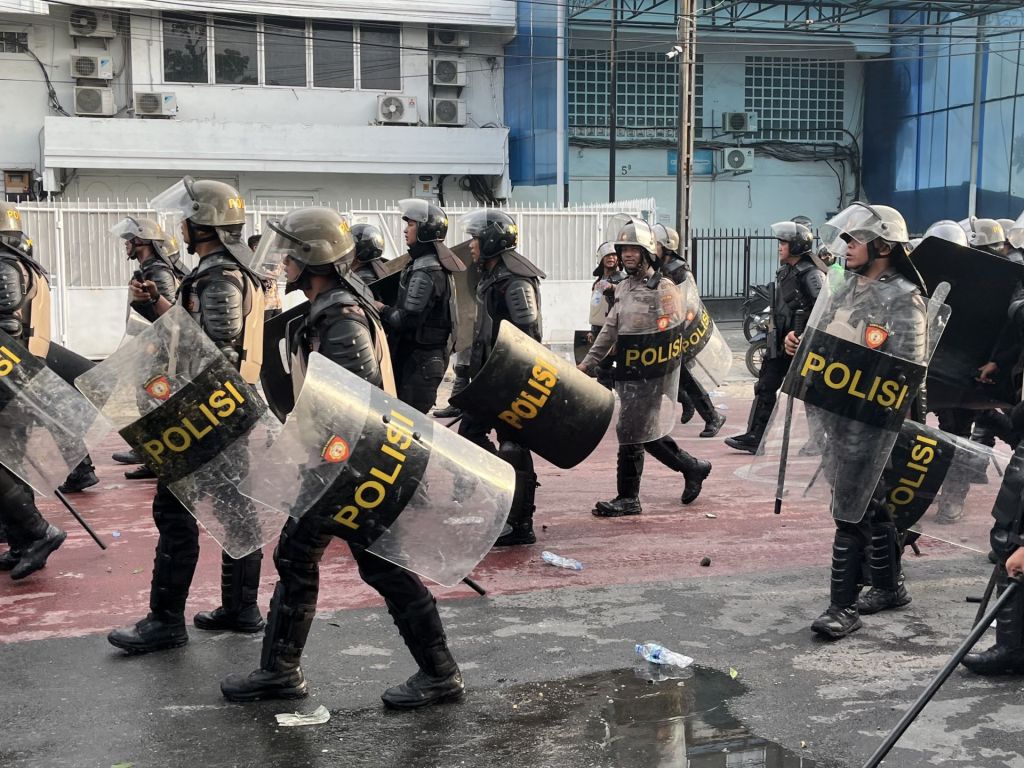
Picture by Nafisathallah / Wikimedia
WHAT IS HAPPENING IN INDONESIA?
For Indonesia, the end of August was far from peaceful.
Over the course of a week, protests filled the streets of at least 31 of Indonesia’s 38 provinces.
Sparked after an increase in parliamentarians’ monthly pay to upwards of 100 million rupiahs, which is around 27x the national minimum wage average. This triggered public outcry demanding police reform and dissolution of the parliament.
Public anger came to a head on the 28th of August when Affan Kurniawan, a ride-hailing driver aged 21, was killed after being hit by a riot police vehicle. The death of a family of five’s backbone, who was not even involved in the protests, fueled further rage, destruction, and demands for reforms.
Jakarta Governor Pramono Anung reported infrastructures damages that included bus stops, toll gates, and surveillance cameras up to Rp 55 billion. Alternately, Indonesia’s Minister of Public Works Dody Hanggodo estimated a cumulative loss of Rp 900 billion, following the infrastructure damages spanning the nation.
Not only damages to public infrastructure, some of Indonesia’s most prominent officials were targeted with social media doxxing, leading to looting. Amongst those targeted, Indonesia’s Finance Minister Sri Mulyani. In an Instagram post responding the looting, Sri Mulyani acknowledged protesters’ critic and feedback, and urged to protect Indonesia as it is our shared home.
Promptly, Indonesia’s 8th President Prabowo Subianto canceled a trip to China and addressed the nation on the 31st of August. In the press conference, President Prabowo, accompanied with political parties officials, ordered them to take firm action against their respective members of House of Representatives (DPR), specially those have made erroneous statements. Moreover, he also revealed that the House of Representatives (DPR) will revoke a number of policies, including the troubled allowances.
HOW DID THE MARKETS REACT?
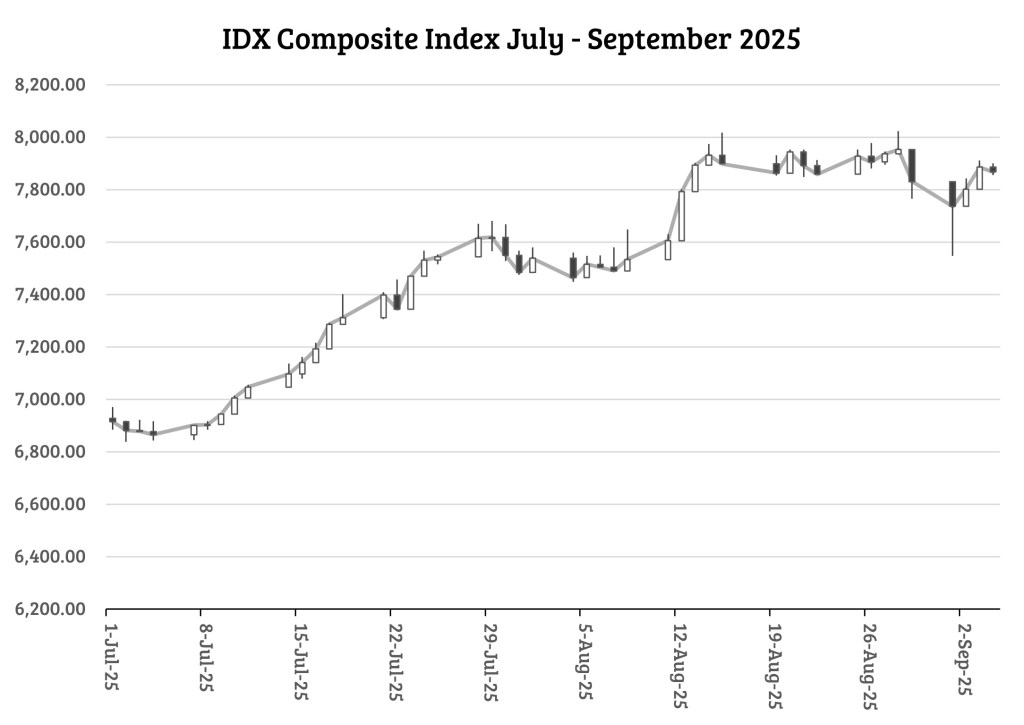
Rising tensions correlated negatively with market sentiment with the IDX Composite Index (IHSG) and Rupiah exchange rates weakening.
Markets shed after it opened on Monday, September 1st weaking by 1.21%. Moreover, net sell reached RP 16.85 trillion, the highest since Liberation Day (April 2025).
BLACKROCK: A BALANCING FORCE?
In the midst of all the madness and seemingly foreign outflow in Indonesia capital markets, Blackrock stands firm with their thesis on Indonesian bonds. Blackrock’s Navin Saigal reassured that the recent headlines did not cause any changes of positions in Indonesia, while highlighting that Indonesian bonds still offer a “decent margin of safety” of 3%.
Saigal also mentioned the possibility that these tensions could act as a catalyst for positive structural change for the nation’s long term.
Depsite the public unrest, BlackRock has actually increased its holdings in 10-15 year maturity bonds, shifting from shorter-term instruments. This is in accordance with Saigal’s belief that longer-dated bonds have shown greater stability in response to Bank Indonesia’s monetary policies.
All in all, BlackRock appears to view the current political climate as a pivot point for Indonesia, where the political turbulence could help induce reforms and strengthen investor confidence in Indonesia..
WHAT’S IT LOOKING LIKE AHEAD FOR INDONESIA?
So far, international investors have poured $2.05 billion into Indonesia’s government bond market in Q1 2025, which is on track for the largest inflow since Q3 2024. Despite this, foreign ownership still remains relatively modest at around 15%, down from 39% at the start of 2020, per data from Bloomberg.
On the political front, President Prabowo Subianto has also made a good first move by swiftly responding to the public’s demands.
The month of September will be a crucial period for Indonesia as both markets and the public watch closely to see how the government follow through on their promises. If Indonesia is able to maintain stability and push for meaningful reforms, this could mean for better confidence amongst investors and serve as a foundation for stronger growth ahead.
Are You Still Optimistic in Indonesia?


Leave a comment