
Looking at Market Sentiment and Global Affairs Post Liberation Day
Picture by Roc0ast3r
Trump’s Reciprocal Tariff Announcement on Liberation Day has sent shock waves to the global equity markets. Since Monday, we have seen global indices fall to record lows. Panic rippled across markets as they opened on Monday.
With Japan’s Nikkei 225 and Indonesia’s JKSE halting trading, the Hang Seng index plunging over 7%, and the United Kingdom’s FTSE 100 reaching lower lows, fears of an impending global recession have gripped investors.
As of Wednesday (09/04/25), the United States imposed a 104% tariff rate on Chinese imports (already in effect.) In response, China retaliated with an 84% tariff rate on U.S goods going into effect tomorrow.
Before getting into the tariff’s direct impact on market sentiment and world affairs, we must understand the Trump Administration’s calculation method behind the Liberation Day tariffs.
Below is the tariff rate formula used by the Trump Administration:
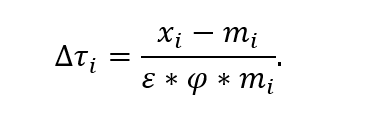
ε = 4
φ = 0.25
xi = total exports
mi = total imports
Founder and CEO of Social Capital, Chamath Palihapitiya, argues that Trump’s so called “reciprocal” tariffs are better described as a “proportional tax” meant to level out the United States’ trade deficit with other countries. He also added that Trump’s across-the-board tariff strategy serves as a preemptive measure to close all loopholes that nations have used to bypass tariffs.
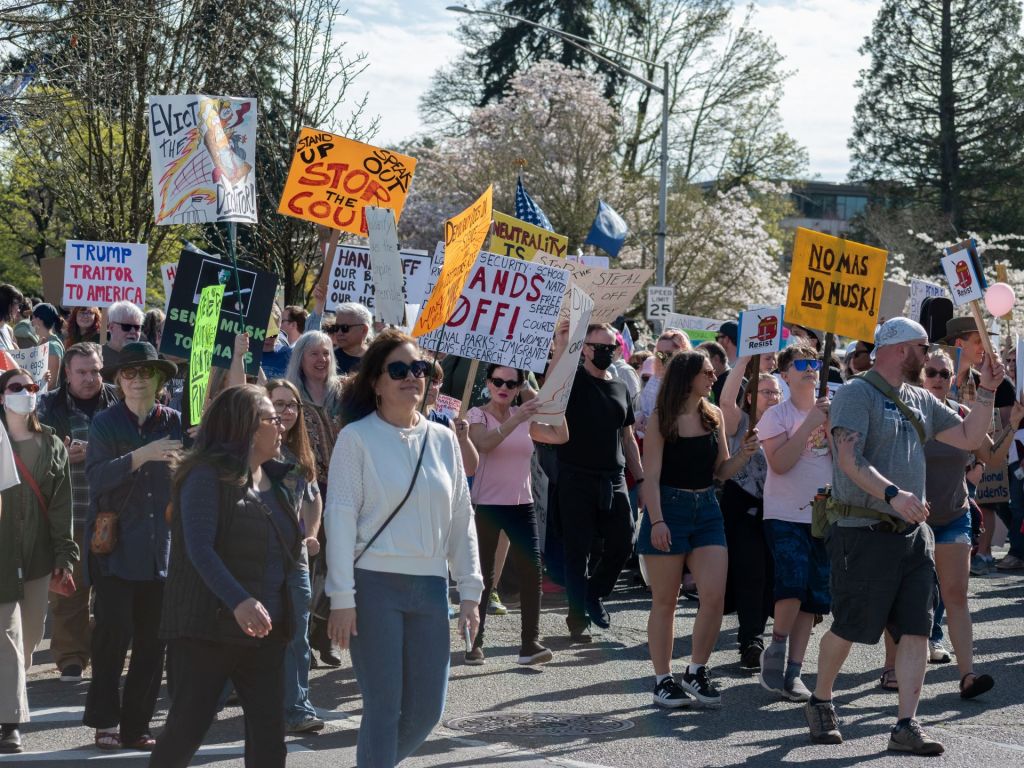
Following Liberation Day, an estimated 3 million Americans took the streets of all 50 states in protest of the Trump Administration’s recent moves. Particularly, the newly imposed global tariffs that have caused global economic turmoil.
In the midst of growing criticism towards the Trump Administration, they remain persistent in its aggressive strategy to reduce the national deficit.
These past few days, there has been a notable shift in sentiment from both retail and institutional investors. Billionaire hedge fund manager Bill Ackman described Trump’s tariff war as “economic nuclear war.”
Similarly, financial analyst Kevin Paffrath expressed his concerns, commenting: “Donald Trump is convinced through a misconceived notion that we must have a trade surplus with every country and that we are going to sell them something whether they like it or not.”
Going back to Trump’s rhetoric on Liberation Day, he introduced the terminology “kind” tariff and “full” tariff. He seemingly doubled down on his strategy by imposing an increased tariff rate to China after Beijing’s retaliation.
This increasing tension between the two economic superpowers are without a doubt adding fuel to the fire.
On April 5th, before Trump’s response to China’s retaliatory tariffs against the United States, Beijing issued a response:
By taking such action, the United States defies the fundamental laws of economics and market principles, disregards the balanced outcomes achieved through multilateral trade negotiations, ignores the fact that the U.S. has long benefited substantially from international trade, and weaponizes tariffs to exert maximum pressure for selfish interests. This is a typical act of unilateralism, protectionism and economic bullying. Under the guise of “reciprocity” and “fairness,” the United States is playing a zero-sum game to pursue in essence “America First” and “American exceptionalism.” It attempts to exploit tariffs to subvert the existing international economic and trade order, put U.S. interests above the common good of the international community, and advance U.S. hegemonic ambitions at the cost of the legitimate interests of all countries. Such action will inevitably face widespread opposition from the international community.
Beijing’s response not only condemns the United States of damaging global trust, but also frames the U.S for being economically irresponsible and destabilizing the global trade order.
China is not alone. U.S allies such as Canada, Germany and the European Union have also announced retaliatory tariffs following Liberation Day.
These coordinated responses reflect the increasingly complicated global affairs that nations face over Trump’s aggressive trade strategy.
The increasing complicated global trade landscape has heighten the risk of an incoming recession. Analysts at J.P Morgan and Barclays have both increased their forecasts of a global recession.
We are currently witnessing a significant reordering of global trade dynamics. The old system built on free trade, international cooperation, and open markets is quickly being replaced by by protectionism and national interest.
Trump’s current tariff strategy may only be the start of a more complex and uncertain economic landscape. How world leaders respond to Trump’s demands could define a new era of either American exceptionalism or one of global economic instability.

Leave a comment